//ads start// //ads end// ಸುತ್ತೋಣ ಬನ್ನಿ - Sutthona Banni: DHARWAD

///ad links google adsence


Hubli (Kannada: ಹುಬ್ಬಳ್ಳಿ ), also called Hubballi, is a major city in the state of Karnataka of India.

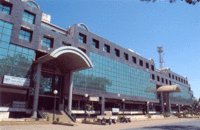
Indira Gandhi Glass House Garden is a public garden with recreational amenities maintained by city municipality. It houses a large glass building resembling a similar structure in Lalbagh of Bengaluru.

Indira Glass House is renovated into more beautiful park. The entry fee of Rs.10/- for elders and Rs.5/- for children is collected. But when you go on walking all around,it feels its more worthy. There is a small train to get on and behold the park. The most beautiful thing to be watched is the musical fountain that is arranged every weekend (Saturday and Sunday) and on Governmental Holidays without any extra charge.

Photo Gallery:


Photos: Naveen Hagaragi-Belgaum (Suthhona Banni Team)
Information Courtesy: Wikipedia


"Navanagar Museum" is built in the “Cultural Complex” of Navanagar (Bagalkot district-Karnataka).You will realise the real culture and tradition of  Bagalkot and surroundings of Bagalkot district. This is one of the Museum in Navanagar with Fine Articles.

Photo Gallery:


Photos & Information: Naveen Hagaragi-Belgaum (Sutthona Banni Team)


Mooru saavira Math is the famous tourist spot in Hubli city.

Courtesy: Wikipedia


Siddharoodha Math is the eminent religious institution, a centre of Advaita philosophy as preached by Swami Siddharoodha, is located at near outskirts of Hubli.

Photo Gallery:


Photos: Sachin Shet- Sirsi
Information Courtesy: Wikipedia


Kundgol is a panchayat town in Dharwad district in the Indian state of Karnataka.

Kundgol is Located in Dharwad District of Karnataka is about 14 km south-west of Hubli and 32 km south-west of Dharwad.

This town is the birth place of Rambhau Kundgolkar (popular as Pandit Sawai Gandharva), a well known Hindustani musician. Gangubai Hangal, Bhimsen Joshi are associated with is place.

History

Kundagol also comes under the core area of Western Chalukya, there is a 11th century Shabhulinga temple.

Prior to 1948, Kundgol was a non-contiguous part of the princely state of Jamkhandi.

Hindustani music and Kundgol


  • Pandit Sawai Gandharva

Rambhau Kundgolkar known as Sawai Gandharva was born in 1886.

Pandit Bhimsen Joshi travelled all over the country looking for an elusive guru. Finally a musician advised him to return home as the best guru was actually very near to his home, Sawai Gandharva in Kundgol. At first the guru rejected Joshi saying his voice is not good but, finally agreed to take him after seeing his determination and thirst for music.

According to Dr Gangubai Hangal, 95-year-old doyen of Hindustani music, Late Abdul Karim Khan visited Dharwad in 1900 and taught Sawai Gandharva, a guru who produced many great disciplines like Dr Hangal and Pandit Bhimsen Joshi. The Nadgir family of Kundgol is known for patronising Hindustani music.

To cater to the needs of cultural activities the Dharwad city boasts of a opera house Savai Gandharava Natyagraha named after the great Hindustani Musician Savai Gandharva the native of Kundgol town near Hubli, on the Hubli - Bangalore rail line. The great celebrity in Hindustani music of the modern times. Dr. Smt. Gangubai Hangal also hails from this place and a resident of Hubli.

  • Dr. Smt. Gangubai Hangal

was born in the family of musicians on 5 March 1913 at Dharwad. Her mother Smt Ambabai was a renowned carnatic singer and father Sri Chikkurao Nadiger of Ranebennur was an agriculturist. Dr Gangubai was Initiated into music by her mother. She learnt music under the guidance of Sri Krishnamacharya Hulgur and later under Sri Sawai Gandharv alias Sri Rambhau Kundgolkar a disciple of late Ustad Abdul Karim Khan, the main architect of kirana gharana school of music.

Tourism

Shambhulinga Temple

At Kundgol there is a huge Shiva temple of 11th century called Shambulinga temple,built by Western Chalukya. It is built with highly polished stones, which are dovetailed into one another. The carvings and images on the pillars are well cut.

On the side of the door steps of the temple, carvings of the Line face a long scroll issuing from its mouth.

This temple dedicated to Shiva and Parvati. Although damaged, the exterior of the temple is decorated with lotus and kirtimukha faces and apparently hundreds of Brahmanical images.

This temple is victim of Muhammadans. It was repaired by a former chief (During 1808-9).

Photo Gallery:

Shambhulinga Temple


Wade at Kundagol. Sawai Gandharva, Bhimsen Joshi, Gangubai Hangal are associated with this wade

Courtesy: Wikipedia


Annigeri is a town in Navalgund taluk of Dharwad district in the state of Karnataka, India, located 20 km west of Gadag en route to Hubli and 35 km from Hubli-Dharwad.

Introduction

Annigeri is the birth place of great Kannada Poet Pampa. Annigeri is well known for the black stone temple Kalyani Chalukyas known as Amruteshwara Temple.A temple of mythological figures supported by 76 columns, located in the Dharwad district, and has a Jain basadi of Parshwanatha. Annigeri also has temples dedicated to Banashankari, Basappa, Gajina Basappa and Hanuman. There is an ancient Veerabhadra temple near the railway station.

Annigeri has 7 mosques and 2 Veerashaiva Mathas.

History

Annigeri was an important political and cultural center in the past.Various kings like the Chalukyas, Yadavas and the Hoysalas annexed the town, which once formed part of the kingdoms of the Kalachuris.

Annigeri was the last capital of Chalukyas Someshwara 4 (during 1184-89) and it was headquarters of famous rich province of Belvola-300.

Annigeri comes under the core area of Western Chalukya architectural activity in the modern Karnataka state. The Amrtesvara Temple is the finest examples produced by the Kalyani Chalukyas (Western Chalukya architecture).

In 1157 the Kalachuris under Bijjala II captured Kalyani and occupied it for the next twenty years, forcing the Chalukyas to move their capital to Annigeri in the present-day Dharwad district.

To Provide education at the primary and Vedic levels, Annigeri had five Brahmapuris.

In 2010, over 100 human skulls were found in a drain at Annigeri. According to the preliminary theories, the area may have been a mass grave around some 150-200 years ago, or it may have been a battle ground.After the discovery, the Archaeological Survey of India officials visited the site, and the government of Karnataka ordered an excavation.

Great Personalities of Annigeri

Adikavi Pampa

Annigeri is the birthplace of the great Kannada poet, Adikavi Pampa.

  • Benjamin Loirice first wrote about Pampa and published the Pampa Bharata in 1882.
  • Sri S G Narasimhachar brought out Adi Purana in 1900 and
  • Kannada Sahitya Parishat published the revised edition of Pampa Bharata In 1931.
  • Govt. of Karnataka established the Pampa Foundation at Annigeri and also instituted Pampa award.

Tourist attractions

Amruteshwara Temple

The Amruteshwara Temple was built in the Dharwad District in 1050 CE with dravida articulation, and was the first temple made of soapstone.

The large and black stone Amruteshwar Temple is in the Kalyani Chalukyas style. The temple has a roof supported by 76 pillars and carvings of mythological figures on its walls.

The Amruteshwara Temple was to be the prototype for later, more articulated structures such as the Mahadeva Temple (Itagi) at Itagi. Based on the general plan of the Amrtesvara Temple, the Mahadeva Temple was built in 1112 CE and has the same architectural components as its predecessor. There are, however, differences in their articulation.

Car Festival

During December and January, Amruteshwara temple is the venue of a festival.

Other Temples

Many other temples are also seen at Annigeri, such as:

  • The Banashankari Temple
  • The Gajina Basappa Temple
  • The Hire Hanuman Temple
  • Puradhireshwar Temple
Photo Gallery:


Courtesy: Wikipedia


Hubli (Also called as Hubballi, Kannada: ಹುಬ್ಬಳ್ಳಿ (Marathi: हुबळी) is a major city in the state of Karnataka of India. Together, twin cities of Hubli and Dharwad, collectively referred to as "Hubli-Dharwad", is the second-largest conurbation in Karnataka after Bangalore. While Dharwad is the administrative headquarters, the city of Hubli, situated about 20 km south-east of Dharwad, is the commercial centre and business hub of North Karnataka. crops like Cotton and peanuts are grown aplenty in the surrounding rural areas, and Hubli is a major trading center for both commodities. It is also an important city for the Indian Railways, being the headquarters for South Western Railway Zone and the Hubli Railway Division. The name Hubballi literally means "flowering creeper" in Kannada.

Demographics

Hubli-Dharwad is located 425 km northwest of Bangalore, on the National Highway 4 between Bangalore and Pune. The City is governed by the Hubli-Dharwad Municipal Corporation , having an elected council. Kannada is the major language of communication. Marathi is also widely spoken.

Climate

The climate of the city is extremely good throughout the year and especially Dharwad is known for its salubrious climate

The M.S.L. of Hubli is 626.97 meters and that of Dharwad is 696.97 meters. The average yearly rainfall is 838 mm .

History

Rayara Hubli, also called 'Eleya Puravada Halli' or 'Purballi' was the old Hubli, where there is a Bhavani Shankara temple and Jaina basti. Under Vijayanagara Rayas, Rayara Hubli grew as a commercial centre, famous for trade in cotton, saltpetre and iron.

The British opened a factory here when it came under the Adilshahis. Shivaji looted the factory in 1673. The Mughals conquered it and the place came under the Savanur Nawab who built a new extension named Majidpura and trader Basappa Shetty built new Hubli around the Durgadabail (fort maidan).

There is the famous Moorusavira Matha, and the Matha authorities claim that it was begun by a Sharana of Basaveshwara's period.

Hubli was conquered by the Marathas from the Savanur Nawab in 1755-56. Later Haider conquered it, but it was recaptured by the Marathas in 1790, and the old town was administered by one Phadke under the Peshwa and the new town by Sangli Patwardhan.

British took old Hubli in 1817 and the new town with 47 other villages was handed over to the British by the Sangli Patwardhan in lieu of the subsidy in 1820. Hubli is a prosperous handloom weaving centre and has a Textile Unit.

The Railway Workshop started here in 1880, made it a reckonable industrial centre.

The Bhavanishankar temple in old Hubli and the impressive Chandramauleshwara / Chaturlinga temple in Unakal are of Chalukyan times. Kundgol, 15 km. south of Hubli, has the huge Shambhu Linga temple of Chalukyan times.

Industrial & Business development

Hubli is one of the fastest developing industrial hub in Karnataka after Bangalore, with more than 1000 allied small and medium industries already established basically located in Gokul Road & Tarihal regions of Hubli. There are machine tools industries, electrical, steel furnitures, food products, rubber and leather industries and tanning industries. With the establishment of K.E.C, Bhoruka textile Mill, Universal Group of Industries, Microfinish Group, N.G.E.F, K.M.F, BDK Group of Industries and Murudeshwar Ceramics[7][8]. It has gathered momentum in industrial development. Hotel industry got the critical revival when Three star hotels were established, the first one was Naveen hotel & then Hans hotel , and with respect to restaurant chain business, Kamat groups are the most significant restaurant groups in Hubli-Dharwad region.

To promote the overall economic development of varied industries, institutions and business houses "Karnataka Chamber of Commerce & Industry" was formed, it's one of the premier association, which has been gaining momentum in achieving potential growth and prosperity in Hubli region .And one more key aspect of industrialisation for Hubli-Dharwad was foundation of Agricultural Produce Market Committee, which aimed at providing hassle free market conditions for farmers, to establish regulated & stimulated production of various agricultural related commodities & goods.

Establishment of new generation Diesel Electric railway locomotive shed in the city by Indian railways was another major boost for development of Industries in this region as this was first of its kind in Indian Railways history, this has created a lot of job opportunities for Diploma & Engineering students of this region.

Hubli Software IT Park is situated in the heart of the City and is promoted by the Government of Karnataka IT Department and KEONICS acts as the modal agency for maintaining and marketing of IT Park Hubli.STPI-Hubli Software Technology Parks of India(Organization under the Dept of IT,Govt of India)has been operational from May 2001 and it is located in the 4th Floor of IT Park, to provide the Data communication, Industry promotion and Incubation services to IT/ITES industry

Trade

The city is situated in the dividing line between Malenadu and planes. The Malenadu is well known for its forests and forest based industries and the other three side region are known for their agricultural products like cotton, groundnut, oilseeds manganese ore and granite stones. The value of agricultural products coming into Hubli market runs into multiple crores. The Cotton Market of Hubli is one among the five biggest markets in India.

Transportation

Hubli is well connected by road, rail and air. NWKRTC (North West Karnataka Road Transport Corporation) is a state run corporation headquarted at Gokul Road, Hubli. There is excellent inter-city transportation between Hubli and Dharwad as NWKRTC and Bendre Nagara Sarige (a consortium of private bus-owners) healthily compete to cater to the large number of commuters between Hubli and Dharwad daily. Bus services from the twin-cities exist to every part of Karnataka and neighbouring states and other popular destinations. There are many private bus operators who render services for overnight travel between Hubli and Bangalore, Mangalore, Pune, Mumbai.

Several express and passenger trains ply between Hubli and Bangalore everyday. Hubli being an important railway junction has daily trains to Bangalore, Mumbai, Pune, Delhi, Hyderabad, Ahmedabad, Vijayawada, Mysore and weekly services to Chennai, Howrah and Thiruvanantapuram.

Kingfisher Airlines provides daily flights to Bangalore, Hyderabad and Mumbai.

Culture

Hindustani classical music diverged from the principle which eventually came to be identified as Carnatic classical music. Karnataka is unique in the sense that it offers rich traditions in both Hindustani as well as Carnatic music. Carnatic music being prevalent in Old mysore, Hoysala Karnataka and parts of Dakshin and Uttara Kannada regions.

Hindustani music is patronized in the regions of Hubli-Dharwad, Hyderabad Karnataka, Belgaum region.

Kundgol, den for renowned Hindustani classical music singers, is a town situated about 20 km south-east of Hubli. Sawai Gandharva, Kumar Gandarva, Gangubai Hangal, Bhimsen Joshi, etc. have had their birth as singers from Hubli.

Tourism

A temple of chalukya times, dedicated to god Chandramouleshvara (another name of Shiva), with impressive architecture can be seen in Hubli.

Bhavanishankar Temple This Chalukyan temple with the image of Sri Narayana is flanked by the ten incarnations of God.

Asar It was built by Mohammed Ali Shah in about 1646 to serve as a hall of justice. The building was also used to house two holy hairs from the Prophet's beard. Women are not allowed inside.

Nrupatunga Hill This is a picnic spot in Hubli

Sayed Fateh Shah Vali

The Shrine of great sufi, The place of worship for both Hindu and Muslims in Hubli Dharwad.

Siddharoodha Math is the eminent religious institution, a centre of Advaita philosophy as preached by Swami Siddharoodha, is located at near outskirts of Hubli.

Unkal Lake

A pictorial water spot with a magnificent sunset view, this perfect picnic spot has green garden, recreational facilities for the children, boating facilities, etc. The lake is 3 km away from Hubli.

Glass House As the name suggests, this is a palace of glass, inaugurated by the former Indian Prime Minister, Smt.Indira Gandhi.

Babashankari Temple Amargol:Between Hubli and Dharwad, Conservation and restoration work is in progress

Photo Gallery:

Chandramouleshwara Temple

Sidharoodha Math Old-Hubli

Courtesy: Wikipedia


Unkal Lake is situated in Dharwad district.Unkal lake is beautiful water spot in Hubli & is about 110 years old. Centre of the lake is situated the statue of Swami Vivekananda which is the prime attraction of the lake. It has recreational facilities for children. You can enjoy a boat ride here. The Unkal lake , however, is large enough to accommodate all visitors as well as the hawkers. Hotel Naveen,the star attraction in Hubli is just beside this spot. It is the source of drinking water to a portion of Hubli.

Photo Gallery:


Courtesy: Wikipedia


Dharwad, also known as Dharwar, (Kannada: ಧಾರವಾಡ) is a city in India's Karnataka state.

Dharwad is the administrative seat of the Dharwad District. The municipality of Hubli-Dharwad (resulting from a merger in 1961 with its twin city Hubli, 22 kilometers away) covers an area of 200.23 km². Dharwad is located 425 km northwest of Bangalore, on National Highway 4, the main highway between Bangalore and Pune in Maharashtra. The climate is mildly hot during the summer, wet during the monsoons and pleasant during winter.

The twin cities have a history behind them dating back to the Hoysala period. Dharwad is famous for its contributions to Indian culture, most notably to classical music and literature, and prestigious educational institutions, such as the Karnataka University. The Dharwad pedha - a milk-based sweetmeat - from this town is very popular.

Today, Dharwad is well-known as a quiet and pleasant city popular with students and pensioners. It continues to grow, with industries dotting both its northern and southern boundaries. In the years ahead, it promises to be a beehive of commercial activity. The location of the city on the NH4 makes it equidistant from 2 of the most industrialised centers in the country - Bangalore , the capital of Karnataka, and Pune the 2nd most industrialised city in Maharshtra.

Geography

Dharwad is situated on the edge of Western Ghats and hence is a hilly town. Spread over seven small hills at an average altitude of 750 meters above sea level, the city enjoys a salubrious climate amidst thick vegetation. Years ago, Dhwarwad was known for its lakes but several have now dried out. The lakes that still exist are Sadhankeri, Kelgeri (a man made lake created during British rule, almost 100 years old) and Nuggikeri. Dharwad sits at the cusp of two distinct geographical divisions - Malenaadu (hilly, forest land with red soil) and Belavalanaadu (Deccan plains with black soil).

Dharwad has plenty of green cover. Karnatak University's Botanical Garden is a sanctuary for many rare plants, trees and birds. Kelgeri and Nuggikeri are also homes for water birds.

History

The word "Dharwad" means a place of rest in a long travel or a small habitation. For centuries, Dharwad acted as a gateway between the Malenaadu (western mountains) and the Bayalu seeme (plains) and it became a resting place for travellers. The name is derived from the Sanskrit word 'dwarawata', 'dwara' meaning "door" and 'wata' or 'wada'meaning "town".

A different theory suggests that during the Vijayanagara rule of Dharwad there was a ruler by name "of Dharav" (1403), and Dharwad got its name from him. There are some inscriptions that refer to Dharwad as Kampana Sthana.

Inscriptions found near Durga Devi temple in Narendra (a nearby village) and RLS High School date back to the 12th century and have references to Dharwad. This makes Dharwad at least 900 years old. Also, there is an inscription at Hanuman Temple at Bokyapur lake near Garag (a village about 18 km from Dharwad).

The Chalukyas ruled Dharwad during the 12th century. A stone inscription indicates that there was a ruler by the name of BhaskaraDeva in 1117. In the 14th century, the district was first overrun by the Bahmani Sultanate, after which it was annexed to the newly established Hindu kingdom of Vijayanagar, an official of which named Dhar Rao, according to local tradition, built the fort at Dharwad town in 1403. After the defeat of the king of Vijayanagar at Talikot (1565), Dharwad was for a few years practically independent under its Hindu governor; but in 1573 the fort was captured by the sultan of Bijapur, Adil Shah, and Dharwad was annexed to his dominions. Adil Shah built a fort in an area later called MannaKille, and later Nazratabad. With this fort, the strategic importance of Dharwad increased and it thus attracted the attention of subsequent conquerors, including Aurangzeb, Shivaji, Aurangzeb's son Mu Azam, Peshwa Balaji Rao, Hyder Ali, Tipu Sultan and finally the British colonizers.

In 1685, the fort was taken by the Mughal emperor Aurangzeb, and Dharwad, on the break-up of the Mughal empire, fell under the sway of the Maratha Peshwa of Pune. In 1764, the province was overrun by Hyder Ali of the Mysore, who in 1778 captured the fort of Dharwad. The fort was retaken in 1791 by the Marathas. After the final defeat of the Peshwa by the British in 1818, Dharwar was incorporated into the territory of the British East India Company's Bombay Presidency. During the early 19th century, when the British were expanding their domains, they faced a lot of opposition from local rulers, including Baba Saheb of Naragund and Kittur Rani Chennamma.

Dharwad was the home to the movement to unify Kannada speaking areas that eventually became Karnataka state.

Dharwad was peaceful for most of late 19th century. During those times, the British started an English medium school in Dharwad in 1848. Later, in 1863, the Basel Mission organization started another school. In 1867 the British opened another school, Varmal school, which later on became known as a training college. In 1883, the municipality area included Sidapur, Lakamanhalli, Haveri Pete, Bagtalan, Madihal, Galaganjikop, Malapur, Kamalapur, Narayanpur, Saptapur, Atti kolla and Hosayellapur. The British government also established a railway station in 1888.

The town had a station on the Southern Maratha railway. By 1901, the town had a population of 31,279 and was home to several cotton gina, a cotton mill, and two high schools, one maintained by the government and the other by the Basel German Mission.

After India's independence in 1947, the Bombay Presidency was reconstituted as India's Bombay State. In 1956 the southern, Kannada-speaking districts of Bombay State, including Dharwad, were added to Mysore and renamed Karnataka in 1972. Dharwad is home to the Karnataka University and the University of Agricultural Sciences (UAS) as well as numerous other colleges.

In 1941, Dharwad had a population of 47,992. In 1961, the town merged with the adjacent town of Hubli to become a single municipality, Hubli-Dharwad. The population of the twin cities is the second-largest in Karnataka, after Bangalore. Hubli-Dharwad's population increased 22.99% between 1981 and 1991, from 527,108 to 648,298, and by 21.2% between 1991 and 2001. In the year 2008, a Circuit bench of the High Court of Karnataka was established in Dharwad.


Culture

The Dharwad region has contributed some of the greatest exponents of Hindustani music including Sawai Gandharva, Mallikarjun Mansur, Bhimsen Joshi (now living in Pune), Basavaraj Rajaguru, Kumar Gandharva and Gangubai Hangal.

Dharwad is an unlikely outpost of the Kirana Gharana. Ustad Abdul Karim Khan was a frequent visitor to Mysore Darbar, where he had been conferred the title of Sangeet Ratna. On the way to Mysore, he used to stay with his brother in Dharwad, where he taught his most famous disciple, Sawai Gandharva. Sawai Gandharva in turn was the guru to Gangubai Hangal, Bhimsen Joshi and Basavaraj Rajaguru.

Jnanpith Award winners D.R. Bendre, V. K. Gokak and Girish Karnad trace their origins to Dharwad.

Food and cuisine

Dharwad produces milk products. Dharwad pedha is made from milk and khoa. Mishra's Line Bazar and Babu Singh's Thakur pedhas are among the better known.

A dish typical of Dharwad is Jolada Rotti made of jowar flour. It is made in two forms—crisp and soft, and is usually eaten with spicy brinjal (eggplant) pallya, kalu pallya (beans), "agasi" or "guryellu" chutney powder and curds.It's available in Prabhu Khanavali near court circle. The now-closed Dharwad Restaurant run by Kidiyoor Sarvothama Rao and Janardhan Rao was popular for masala dosa and was a popular hang-out place for college students. Other restaurants in Dharwad include LEA Canteen (is famous for Mirchi, Girmit & Avalakki), Basappa Khanavali, Megha Darshini, Kamat Hotels, Mytri Paradise, Bombay Restaurant(tuppa dosa(ghee dosa) with sweet Jhunuka is very tasty), Hoysala, Hotel Brindavan, Mandar Regency, Travel Inn, Ozone, etc. Phadd made of rice flour is also a good dish, eaten with Sambhar and coconut or groundnut chutney. It is available at Paul Canteen near JSS college and Bombay Restaurant near Gandhi Chowk. Sheetal Goan Fishland on Kalghatgi Road is a popular place for sea food and Hashmi Hotel is good for non-veg dishes. Last but not the least, Manju Canteen at Navodaya Nagar which is very famous for mirchi and girmit in Dharwad and is considered as a hang-out place where local boys meet in the evening to while away the time.

Agriculture

Dharwad cultivates a variety of food products. The Dharwad Cotton Hybrid (DCH), a popular variety of cotton a few years back, was basically invented in University of Agricultural Sciences. In addition to this, Dharwad produces varieties of channa, kardi, soya and groundnut seeds. Also, farmers grow sugarcane, paddy, jowar, wheat, green gram, bengal gram, munge and many other food products. Dharwad Alphonso mangoes and Navalur gauvas are also produced.

PLACES OF TOURIST INTEREST IN THE TOWN OF DHARWAD

1. The Karnataka University situated in Pavate Nagar.

2. University of Agricultural Science

3. The Two Main entraces into the Fort

4. The temple of Someshvar at Someshvar (Which is also the source of the river Shaalmalaa)

5. The temple of Dattaatreya Swamy

6. The temple of Goddess Durga

7. The temple of Hanuman at Nuggikeri

8. The Kelgeri Tank

9. The Mutt of Murugharaajendra Swaamy.

10. The All saints Church

11. The Vidyavardhaka Sangha

12. The Temple of Loard Uluvi Channabasaveshwara

13. The Dhummavaada Tank (also known as Nirsaagar)

14. The Tatvaanveshana Mandira

15. The temple of Goddess Banashankari at Amargol.

16. Bendre Bhavan

17. The Mallikarjun Mansur Trust Building

PLACES OF INTEREST IN THE TOWN OF HUBLI

1.The Nriputunga Hill

2.The Unakal Tank

3.The Chandramouleeshvara Temple at Unakal

3.The Siddhaaruudha Mutt

4.The temple of goddess Tuljaa bghavani

5,The Railway workshop

6.The Muuru Savira Mutt

7.The Satya Saayi Baabaa Temple at Unakal

8.Sayyad Fate-Shaa vali Darga

Photos:


Dattatreya Temple

Karnataka University

Karnataka Arts College

Courtesy: Wikipedia